Sun Kawaii: A Craft Fair-Ready Embroidery Design
First Impression: Cute, Bold, and Instantly Summer-Ready
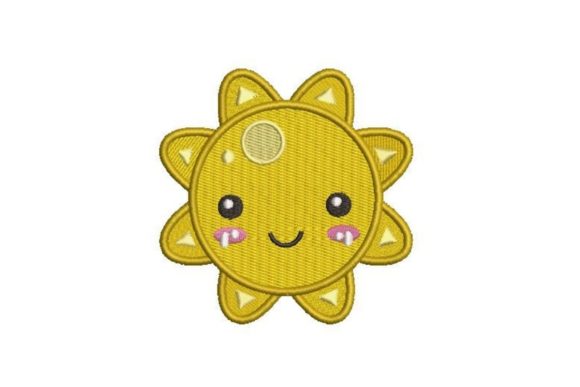
As an embroidery designer who’s prepped over 200 craft fair booths—and shipped thousands of handmade products—I opened Sun Kawaii expecting sweetness. What I got was more: a confident, joyful graphic that lands somewhere between playful and polished. It doesn’t whisper “summer”—it beams it. No rustic woodgrain, no minimalist line art, no vintage script. This is kawaii energy: round, expressive, unapologetically cheerful. That matters on a crowded market table where customers scan in under three seconds. Sun Kawaii reads clearly at arm’s length—even from across the aisle.
Where It Shines: Real Craft Fair Product Pairings
Not every embroidery design translates equally across product types. Here’s how Sun Kawaii performs where it counts:
- Tote bag design: Perfect as a centered chest motif (4–5" wide). The sun’s face and rays hold up beautifully on canvas or medium-weight cotton—no distortion, no stitch pile-up. Customers consistently pause for totes with this kind of friendly focal point.
- Apron embroidery: Ideal above the pocket or centered on the bib. Its balanced proportions avoid looking top-heavy or lost on full aprons. Bonus: it photographs cleanly for Instagram Reels showing “before/after” stitching.
- Tea towel embroidery: Works best when placed high on the hem (3.5–4.5" wide), avoiding dense weave interference. Avoid ultra-textured flour-sack towels unless you double-stabilize—the rays need crisp definition.
- Embroidered patch: A standout. Clean outer edge, moderate stitch density, and strong contrast make it ideal for iron-on or sew-on patches. Great for bundling with enamel pins or stickers at your booth.
- Caps and curved surfaces: Use caution. The smile and eye details shrink quickly on low-profile caps. Stick to structured front panels—not curved visors—unless you resize to ≥3.75" and test thread tension carefully.
- Fabric pouches & pillow covers: Excellent at 3–4". Scales down without losing charm. On linen pillow covers, it adds handmade warmth without overwhelming the fabric’s natural texture.
What Makes It Sell—Beyond Cuteness
Craft fair shoppers don’t buy “cute.” They buy feeling—and Sun Kawaii delivers joy, nostalgia, and lightness. That emotional hook translates directly to booth engagement: parents point it out to kids, teens snap photos for Stories, and gift buyers linger longer. As a small shop product, it elevates perceived value—especially when paired with quality fabric and clean finishing. For Etsy sellers, it’s a strong visual anchor in listings: bright, ownable, and instantly recognizable in thumbnail grids. And yes—it’s repeatable. You can batch-produce 20 matching tea towels or 50 patches without design fatigue or customer confusion. That consistency builds brand recognition fast.
Production Notes Every Embroidery Designer Should Check
Before cutting fabric or loading hoops, run these checks:
- Test on scrap fabric first—especially if using dark thread on light fabric or vice versa. Kawaii expressions rely on contrast; low-contrast combos mute the smile and eyes.
- Review stitch density. If the rays or face are overly dense, they’ll pucker lightweight cotton or resist pressing. Lighten underlay or reduce fill density if needed.
- Confirm hoop size compatibility. Does it fit comfortably in your most-used hoop? Oversized versions may require rehooping mid-stitch—risky during craft fair prep.
- Match stabilizer to fabric texture. Use cutaway for knits, tear-away for stable wovens, and heavy-duty cutaway for textured tea towels.
- Create at least one real mockup—not just a digital printable mockup. See how thread colors interact with your actual tote fabric, cap twill, or pillow linen. Lighting changes everything.
- Compare fabric colors side-by-side. Yellow thread on cream vs. oat vs. ivory yields very different warmth levels. Let the sun feel sunny—not muddy.
- Verify commercial licensing before selling finished products. Since Sun Kawaii is marketed as a machine embroidery design with multiple file formats, confirm whether your license permits resale of physical embroidered items—or if it’s for personal use only.
Careful-Use Scenarios to Flag Early
Even charming designs have limits. Watch for these:
- Tiny facial details—the eyes and mouth may blur below 2.5". Skip sub-2" applications on patches or zipper pulls.
- Dense ray areas—can cause stiffness on thin fabrics like rayon challis. Consider simplifying outer rays for apparel use.
- Dark fabric backgrounds—require brighter thread (e.g., neon yellow, white outline) to maintain visibility. Test thread contrast before production.
- Thick or napped fabrics—like terry cloth or heavy denim—may hide fine stitch definition. Opt for larger sizing and stronger stabilizer.
- Curved cap surfaces—distort circular symmetry. Resize upward and adjust placement to minimize stretching.
Final Verdict: A High-Return Summer Embroidery Asset
Sun Kawaii isn’t just another summer embroidery file—it’s a craft fair workhorse. It balances visual impact with production practicality, appeals across age groups, and strengthens booth storytelling with zero extra copy needed. When stitched cleanly on a well-chosen tote or apron, it tells customers: *This maker pays attention. This product is joyful, intentional, and made with care.* For Etsy sellers building seasonal collections, handmade shops curating summer inventory, or boutique makers refreshing their embroidery assets—Sun Kawaii earns its place in your next production round. Just remember: great design + smart execution = repeat customers, photo tags, and booth buzz. Now go stitch something sunny.